Data Governance Market Expected to Grow to USD 17.31 Billion, with a 15.0% CAGR by 2035
Data Governance Market advances as organizations prioritize data quality, privacy, compliance, security, and trusted

Press Release Disclaimer: This is a press release distributed through the XPR Media network. It has not been independently verified by our newsroom.
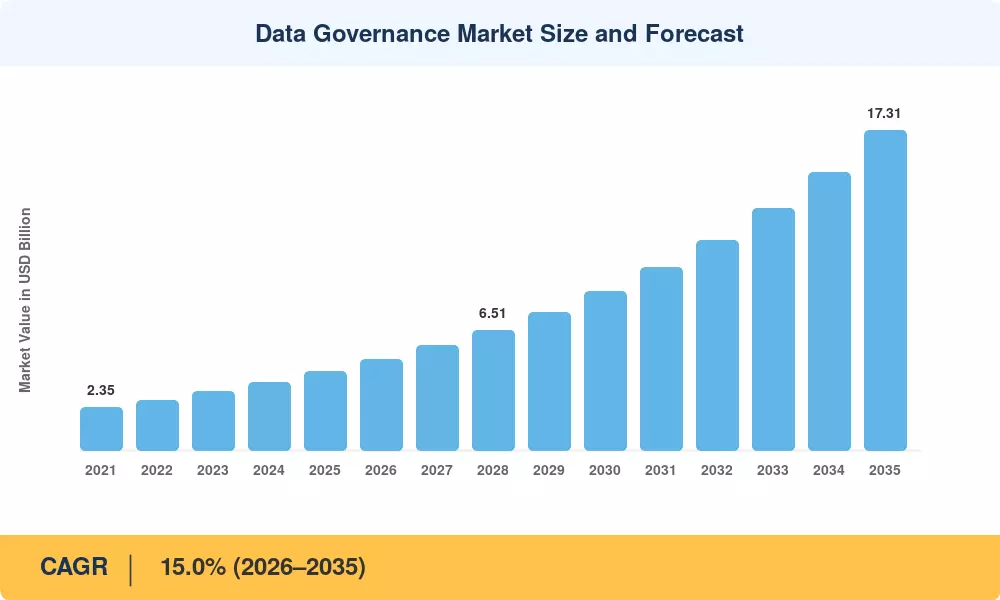

Data Governance Market advances as organizations prioritize data quality, privacy, compliance, security, and trusted access to enterprise information.
NEW YORK, NY, UNITED STATES, September 3, 2026 /EINPresswire.com/ — The Data Governance Market is growing as organizations increasingly focus on managing data quality, security, privacy, compliance, and accessibility across complex digital environments. Cloud adoption, artificial intelligence, big data analytics, regulatory requirements, and digital transformation are encouraging businesses to deploy advanced governance solutions for data discovery, cataloging, classification, lineage, access control, and policy management. Financial services, healthcare, retail, manufacturing, and government organizations are adopting these technologies to improve data reliability and reduce operational and compliance risks.
The growing need for trusted data for AI applications, automated decision-making, and business intelligence is further creating opportunities for governance platforms, while emerging technologies such as active metadata, AI governance, privacy-enhancing tools, and automated policy enforcement are expected to influence the market’s continued development.
The Data Governance Market is expanding as organizations face increasing regulatory pressure, AI adoption, cloud migration, and growing volumes of enterprise information. The market reached USD 4.28 billion in 2025 and is projected to rise from USD 4.92 billion in 2026 to USD 17.31 billion by 2035, registering a CAGR of 15.0%. Governance is increasingly shifting from manual documentation toward automated, policy-driven data management.
Get a Sample PDF of the Report at –
https://www.marketresearchfuture.com/sample_request/2362
Growing Need for Data Governance Solutions
Organizations are moving away from spreadsheet-based glossaries and manual approval processes toward platforms that continuously discover, classify, catalog, and monitor data. Modern governance technologies can provide visibility across data pipelines while helping organizations enforce policies at the point where information is accessed or processed. This transition is making data governance an important part of enterprise technology infrastructure.
Regulatory Compliance Driving Adoption
Increasing privacy and AI regulations are creating stronger demand for data governance technologies. Organizations must increasingly demonstrate where information originates, how it is processed, who can access it, and whether appropriate controls are in place. Regulatory requirements surrounding AI training data, privacy, financial reporting, and data protection are encouraging enterprises to invest in governance platforms that provide auditable evidence.
Artificial Intelligence and Data Governance
Artificial intelligence is creating new requirements for data quality, provenance, classification, and accountability. AI systems depend heavily on reliable datasets, making governance essential for tracking data sources and identifying potential quality or compliance problems. The growing use of autonomous AI agents is also creating demand for governance capabilities that can control how non-human systems access and use enterprise information.
AI Agent Governance
AI agents are emerging as a new opportunity within the Data Governance Market because conventional role-based access models may not adequately describe what autonomous systems are permitted to do. Organizations increasingly need to understand which agents can access specific information, under what conditions, and on whose behalf. Agent registries, entitlement management, and context-aware controls are therefore becoming important emerging capabilities.
Cloud Migration and Data Governance
Cloud migration is changing the way enterprises implement governance because information is increasingly distributed across multiple cloud platforms and data environments. Cloud-native governance capabilities can automatically capture metadata and lineage as data moves through managed pipelines. However, multi-cloud organizations may still require vendor-neutral governance layers to maintain consistent policies across different infrastructure providers.
Data quality management is becoming a critical application as organizations rely increasingly on information for analytics, automation, and AI decision-making. Poor-quality data can reduce model performance and create inaccurate business outcomes. Automated quality monitoring, validation rules, lineage tracking, and continuous remediation can help enterprises identify problems earlier and improve confidence in business-critical information.
Data Catalog and Metadata Management
Data catalogs provide organizations with centralized visibility into available datasets, ownership, classifications, and relationships between information assets. Modern platforms are increasingly using active metadata to continuously update catalogs rather than relying on periodic manual scans. This approach helps data teams locate trusted information more efficiently while supporting compliance, analytics, and AI initiatives.
Data Lineage and Traceability
Data lineage enables organizations to understand how information moves from its original source through transformations and ultimately into reports, applications, or AI systems. Traceability is particularly important for regulated industries because organizations may need to demonstrate the origin and transformation history of critical information. Automated lineage capabilities are therefore becoming a fundamental feature of modern governance platforms.
Data Privacy and Security Governance
Data security and privacy governance is one of the fastest-growing areas within the market, expanding at an estimated 18.25% CAGR. Organizations are increasingly combining data discovery, classification, privacy controls, and access policies to protect sensitive information. This integrated approach can help businesses manage regulatory requirements while reducing the risk of unauthorized data exposure.
BFSI Data Governance
Banking, financial services, and insurance represent the leading end-user industry, accounting for approximately 23.6% of 2025 revenue. Financial institutions face strict requirements surrounding risk data aggregation, reporting integrity, privacy, and technology resilience. Governance platforms help financial organizations maintain traceability and establish stronger controls over the information used for regulatory reporting and business decisions.
Manufacturing Data Governance
Manufacturing is projected to be the fastest-growing end-user segment, advancing at approximately 17.6% CAGR through 2035. Connected factories, supply-chain digitization, industrial IoT, and product traceability are increasing the amount of information that manufacturers must manage. Data governance can support consistent information across production systems while helping organizations meet emerging traceability and digital product requirements.
Data Governance in Healthcare
Healthcare organizations manage sensitive patient, clinical, research, and operational information across increasingly complex digital environments. Data governance can help establish ownership, consent controls, retention policies, and data-quality standards. As healthcare organizations expand AI and analytics applications, reliable governance becomes increasingly important for protecting sensitive information and supporting responsible data use.
Buy Latest Edition of Market Study Now:
https://www.marketresearchfuture.com/checkout?currency=one_user-USD&report_id=2362
Retail and E-Commerce Governance
Retailers and e-commerce businesses collect significant volumes of customer, transaction, product, and behavioral information. Governance platforms can help organizations manage consent, improve data quality, and control how customer information is activated across marketing and personalization systems. Strong governance can also help retailers maintain customer trust while complying with increasingly complex privacy requirements.
Data Governance for IT and Telecom
IT and telecommunications organizations manage large volumes of subscriber, network, application, and operational information. Governance technologies can help these businesses establish consistent ownership and policies across distributed systems. Increasing data monetization, cloud migration, and network modernization are further strengthening the need for reliable metadata, quality management, and access controls.
Government and Public Sector
Government agencies are increasingly developing centralized data strategies to improve public services and information sharing. Data governance can support standardized data definitions, secure information exchange, privacy protection, and regulatory compliance. National data strategies and sovereign-cloud initiatives are creating additional opportunities for governance platforms capable of operating within specific jurisdictional requirements.
Cloud Deployment Leadership
Cloud deployment accounted for approximately 67.4% of installations in 2025, reflecting the increasing use of cloud-native data platforms. Cloud governance can simplify implementation and provide scalable infrastructure for distributed organizations. At the same time, regulated industries continue to maintain on-premise environments where data residency, security, and operational requirements demand greater local control.
Large Enterprise Adoption
Large enterprises represented approximately 65.3% of the market in 2025 because multinational organizations typically manage extensive data estates across multiple jurisdictions. These organizations face complex regulatory obligations and require centralized visibility across business units and technology environments. However, small and medium-sized enterprises are emerging as a rapidly growing segment as modular SaaS pricing lowers implementation barriers.
Data Governance for SMEs
Small and medium-sized businesses are increasingly adopting modular governance platforms that can be deployed without the extensive resources traditionally associated with enterprise governance programs. Subscription-based pricing, cloud deployment, automated classification, and simplified administration are making governance technologies more accessible. This expansion can create new growth opportunities for vendors targeting the mid-market.
Browse In-depth Market Research Report:
https://www.marketresearchfuture.com/reports/data-governance-market-2362
Data Governance and Data Monetization
Organizations increasingly view data as a commercial asset rather than only an operational resource. Businesses that sell, exchange, or provide data products require mechanisms for defining quality, freshness, ownership, and usage conditions. Governance platforms can support machine-readable data contracts and automated monitoring, helping organizations transform governance capabilities into infrastructure for responsible data monetization.
Sovereign Data Governance
Data localization requirements are increasing demand for governance architectures that can keep sensitive metadata and information within specific geographic boundaries. Federated governance models can allow organizations to maintain local catalogs while providing a unified global view. These architectures are particularly relevant in regions where sovereign-cloud and national data policies influence technology procurement.
Unstructured Data Governance
The rapid growth of documents, images, audio, video, and multimodal AI content is creating a new governance challenge. Traditional governance tools were often designed primarily for structured databases, while modern AI applications increasingly depend on unstructured information. Vendors are therefore expanding classification, lineage, retention, and access capabilities to cover broader categories of digital assets.
Challenges in Data Governance Adoption
Data governance programs can face challenges involving skilled personnel, fragmented legacy systems, incomplete metadata, integration complexity, and uncertainty around return on investment. Legacy mainframes and undocumented data transformations can make automated discovery difficult. Organizations therefore need both appropriate technology and clearly defined ownership models to ensure that governance initiatives produce sustainable results.
Data Stewardship Talent Gap
Effective governance requires collaboration between technical teams, business users, compliance specialists, and data stewards. A shortage of experienced professionals can delay implementation and reduce the value generated by governance platforms. Organizations increasingly need dedicated platform owners and domain-level stewards who can translate business requirements into enforceable data policies.
Autonomous Governance Operations
Automation is expected to become increasingly important as enterprise data estates reach greater scale. AI-assisted classification, policy recommendations, automated quality rules, and agent governance can reduce manual workloads. Over time, governance teams may focus more heavily on reviewing exceptions and managing policies while automated systems perform routine discovery, monitoring, and remediation activities.
Competitive Landscape
The Data Governance Market includes enterprise software providers, cloud technology companies, data-management specialists, and privacy platforms. Key companies identified in the Market Research Future report include Informatica, Microsoft, Collibra, IBM, Oracle, Databricks, Alation, SAP, Snowflake, Atlan, OneTrust, and Ataccama. Competition is increasingly focused on active metadata, AI governance, cloud integration, data quality, privacy, and multi-cloud capabilities.
Recent Market Developments
The competitive landscape is also experiencing consolidation as major technology companies expand their governance capabilities. Salesforce completed its approximately USD 8 billion acquisition of Informatica in November 2025, while Collibra acquired Octopai to strengthen automated discovery and lineage across legacy environments. These developments highlight the increasing strategic importance of governance within broader enterprise data and AI platforms.
North America Data Governance Market
North America leads the global Data Governance Market with approximately 39.6% of 2025 revenue. Strong enterprise technology adoption, privacy regulations, AI governance requirements, and financial reporting obligations are supporting regional demand. The United States accounts for the majority of regional revenue, while Canada is also experiencing strong growth as privacy modernization and digital financial services increase governance requirements.
Europe Data Governance Market
Europe represents the second-largest regional market with approximately 27.4% of revenue. The region’s strong regulatory environment is creating significant demand for data quality, provenance, privacy, and compliance capabilities. Requirements associated with AI governance, digital data access, financial technology resilience, and cross-border data management are encouraging enterprises to invest in centralized governance infrastructure.
Asia-Pacific Data Governance Market
Asia-Pacific is the fastest-growing regional market, with a projected CAGR of approximately 16.9% through 2035. Digital transformation, data localization requirements, manufacturing modernization, and expanding cloud adoption are supporting market development. India, China, Japan, South Korea, and ASEAN economies are creating opportunities for governance providers as organizations build new data environments and modernize existing infrastructure.
South America Data Governance Market
South America is developing steadily as organizations respond to privacy regulations, banking modernization, and digital transformation. Brazil represents the largest market in the region, supported by LGPD compliance and expanding open-finance initiatives. Consumption-based pricing models can help governance providers reach organizations with constrained technology budgets while maintaining scalable deployment options.
Middle East and Africa Data Governance Market
The Middle East and Africa represent an emerging opportunity driven by sovereign-cloud programs, national data strategies, privacy requirements, and digital transformation. Saudi Arabia and the United Arab Emirates are developing advanced data ecosystems, while South Africa and other markets are strengthening privacy and governance practices. Localization requirements may favor deployable and federated governance architectures in the region.
Future Outlook for Data Governance Market
The Data Governance Market is expected to experience sustained expansion as governance becomes increasingly connected to AI assurance, privacy compliance, data quality, and enterprise risk management. The market is projected to grow from USD 4.92 billion in 2026 to USD 17.31 billion by 2035 at a CAGR of 15.0%. AI agent governance, automated policy enforcement, sovereign data architectures, unstructured data governance, and data monetization are expected to create significant opportunities.
Frequently Asked Questions:
What is the Data Governance Market?
The Data Governance Market includes software and services that help organizations manage data quality, ownership, security, compliance, access, lineage, and policy enforcement.
What will the market be worth by 2035?
The market is projected to reach approximately USD 17.31 billion by 2035, growing at a CAGR of 15.0%.
What is driving market growth?
AI regulation, cloud migration, privacy requirements, data quality needs, and increasing data volumes are major growth drivers.
Which region leads the market?
North America leads with approximately 39.6% of global revenue in 2025.
Which region is growing fastest?
Asia-Pacific is expected to be the fastest-growing region, with a projected CAGR of 16.9%.
Which component dominates?
Software leads the market with approximately 61.1% of 2025 revenue.
Which industry leads adoption?
BFSI is the leading end-user industry, accounting for approximately 23.6% of 2025 revenue.
What are the major challenges?
Talent shortages, legacy data fragmentation, implementation complexity, ROI concerns, and overlapping cloud-native tools remain key challenges.
➤➤ Featured Insights from Market Research Future:
Apac Data Governance Market –
https://www.marketresearchfuture.com/reports/apac-data-governance-market-60036
Argentina Data Governance Market –
https://www.marketresearchfuture.com/reports/argentina-data-governance-market-60034
Brazil Data Governance Market –
https://www.marketresearchfuture.com/reports/brazil-data-governance-market-60039
Canada Data Governance Market –
https://www.marketresearchfuture.com/reports/canada-data-governance-market-60031
China Data Governance Market –
https://www.marketresearchfuture.com/reports/china-data-governance-market-60038
France Data Governance Market –
https://www.marketresearchfuture.com/reports/france-data-governance-market-60030
Gcc Data Governance Market –
https://www.marketresearchfuture.com/reports/gcc-data-governance-market-60032
Germany Data Governance Market –
https://www.marketresearchfuture.com/reports/germany-data-governance-market-60028
India Data Governance Market –
https://www.marketresearchfuture.com/reports/india-data-governance-market-60035
Japan Data Governance Market –
https://www.marketresearchfuture.com/reports/japan-data-governance-market-60029
Mexico Data Governance Market –
https://www.marketresearchfuture.com/reports/mexico-data-governance-market-60037
South America Data Governance Market –
https://www.marketresearchfuture.com/reports/south-america-data-governance-market-60033
Uk Data Governance Market –
https://www.marketresearchfuture.com/reports/uk-data-governance-market-60027
Us Data Governance Market –
https://www.marketresearchfuture.com/reports/us-data-governance-market-15886
Market Research Future
Market Research Future
+1 855-661-4441
email us here
Legal Disclaimer:
EIN Presswire provides this news content “as is” without warranty of any kind. We do not accept any responsibility or liability
for the accuracy, content, images, videos, licenses, completeness, legality, or reliability of the information contained in this
article. If you have any complaints or copyright issues related to this article, kindly contact the author above.

Media gallery