Busch Vacuum Solutions Supports Ardagh with Advanced Vacuum Control for Stable Glass Forming Processes
MAULBURG, GERMANY, August 13, 2026 /EINPresswire.com/ -- When a glowing drop of glass enters the mold at Glaswerk

Press Release Disclaimer: This is a press release distributed through the XPR Media network. It has not been independently verified by our newsroom.
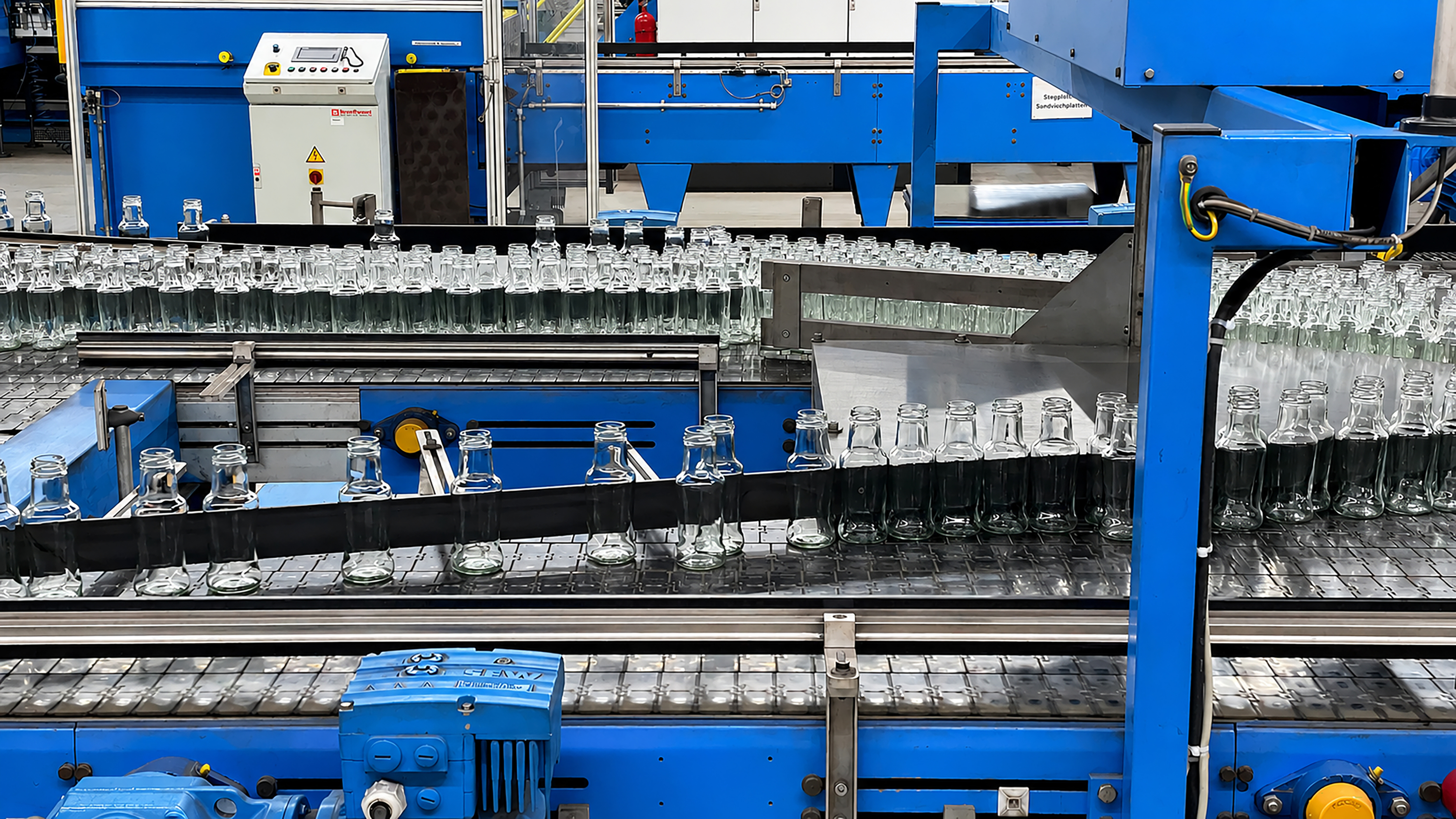

MAULBURG, GERMANY, August 13, 2026 /EINPresswire.com/ — When a glowing drop of glass enters the mold at Glaswerk Neuenhagen, a brief, highly dynamic process begins. This is the moment that decides whether dimensional accuracy, wall thickness distribution and surface quality meet industrial requirements. The material must be precisely shaped and stabilized within a few seconds. A precisely matched vacuum level supports and actively influences the forming process.
The site belongs to the internationally active Ardagh Group, a world-wide leading provider of packaging solutions with a clear focus on container glass manufacturing. The requirements for process safety and repeatability in the forming process are accordingly high.
The forming process is characterized by changing geometries, different product requirements and varying thermal and time constraints. Vacuum is not just a supply variable, but rather a process-relevant control parameter. Its level must be precisely matched to the respective conditions.
The vacuum supply was therefore dimensioned together with Busch Vacuum Solutions according to the requirements specific to glass forming.
Reproducible vacuum conditions in the forming process
During the forming process, vacuum is used to control the deaeration of the molding chambers, working in conjunction with the internal overpressure. Together, both variables define the boundary conditions for even material distribution and a stable formation of the container geometry. To ensure that this process is repeatable, the vacuum level must be kept within tight tolerances and synchronized precisely with the individual process steps.
In modern individual section machines (IS machines), the maximum volumetric capacity of the vacuum pump is not crucial. Rather, the decisive factor is the overall system’s ability to provide the required vacuum level quickly under varying load conditions. Modifications in the container geometry, gob weight or thermal state of the glass lead to changes in gas loads. This results in dynamic vacuum demand that must be continuously compensated for.
In the previous configuration, the vacuum supply was provided by oil-lubricated rotary vane vacuum pumps. The vacuum level was only influenced by completely switching the individual pump stages on or off. This mode of operation did not allow fine-tuning to the actual process requirements. This meant that it no longer corresponded to the state of the art of a modern, control-based vacuum supply. Changes in the process, such as product changeovers or modified cycle times, led to deviations from the original operating conditions. As a result, the required vacuum level was not available at the right time and was temporarily above or below the setpoint.
Stable glass forming therefore requires a vacuum system capable of continuously detecting dynamic load changes and compensating for them with control technology. This minimizes time delays and avoids significant overshoots in the vacuum level.
The solution: vacuum as a controlled process variable
Together with Ardagh, a new vacuum concept based on screw vacuum technology using COBRA NC vacuum pumps was implemented. The dry, contactless screw technology works without operating liquids in the compression chamber and is designed for continuous industrial operation.
Busch supported the project at more than just the component level. The process-side requirements for glass forming were translated into a suitable control strategy for vacuum generation. The vacuum pumps used are equipped with frequency converters that enable continuous adjustment of the motor rotational speed.
Instead of constant operation, the volumetric capacity of the pumps is adapted to the respective process conditions as required. The pumps operate predominantly in the partial load range and only with higher power when required. In combination with the dry pumping principle, this operating mode reduces mechanical stress. In addition, wear and thermal load on the system is significantly minimized.
Vacuum is thus no longer regarded as a static supply variable but is used in a targeted manner as a process variable that is actively regulated to meet process requirements. Integrated pressure measurement continuously records the current vacuum level, and the control circuits keep it stable by adjusting the rotational speed of the motor. In this way, the vacuum level remains constant even during changing operating conditions.
Results during ongoing operation
With the new vacuum concept, the vacuum conditions in the forming process can be reliably set and maintained throughout the cycle. This allows for more consistent wall thicknesses, reduced quality-relevant deviations and minimized readjustments during ongoing operation.
The energy consumption is noticeably reduced as the vacuum pumps are no longer operated continuously at maximum power. At the same time, partial load operation reduces mechanical stress, reduces wear and tear and extends maintenance intervals.
“The new vacuum solution has significantly improved our process stability,” says Guido Reichelt, electrical foreman at Ardagh Neuenhagen. “With the previous technology, there were pressure fluctuations in the system – now the vacuum level remains constant. This ensures uniform forming conditions and enables us to significantly reduce energy consumption, noise and heat load as well as maintenance effort.”
These effects have a direct positive impact on plant availability, operational planning and safety.
Transferable concept for demanding forming processes
The vacuum concept implemented at Ardagh has a modular design. It is designed specifically for industrial production environments with high quality requirements.
It is particularly suitable for processes in which the vacuum requirement changes continuously due to changing product geometries or dynamic operating conditions.
By combining robust vacuum technology with deep process understanding, Busch helps manufacturers establish vacuum as a stable and controllable process variable. The result is reproducible processes, more efficient energy use and higher operational safety.
This project shows how precisely controlled vacuum directly contributes to process safety and product quality – wherever vacuum influences the shaping and creation of products.
Dr Sandra Thirtle-Höck
Busch Group
+49 6441 8021460
email us here
Legal Disclaimer:
EIN Presswire provides this news content “as is” without warranty of any kind. We do not accept any responsibility or liability
for the accuracy, content, images, videos, licenses, completeness, legality, or reliability of the information contained in this
article. If you have any complaints or copyright issues related to this article, kindly contact the author above.

Media gallery