What Makes CHANCCTV ToF Lens Development Suitable for Facial Recognition and Artificial Intelligence Projects
FUZHOU, FUJIAN, CHINA, August 13, 2026 /EINPresswire.com/ -- Implementing reliable facial recognition and artificial

Press Release Disclaimer: This is a press release distributed through the XPR Media network. It has not been independently verified by our newsroom.
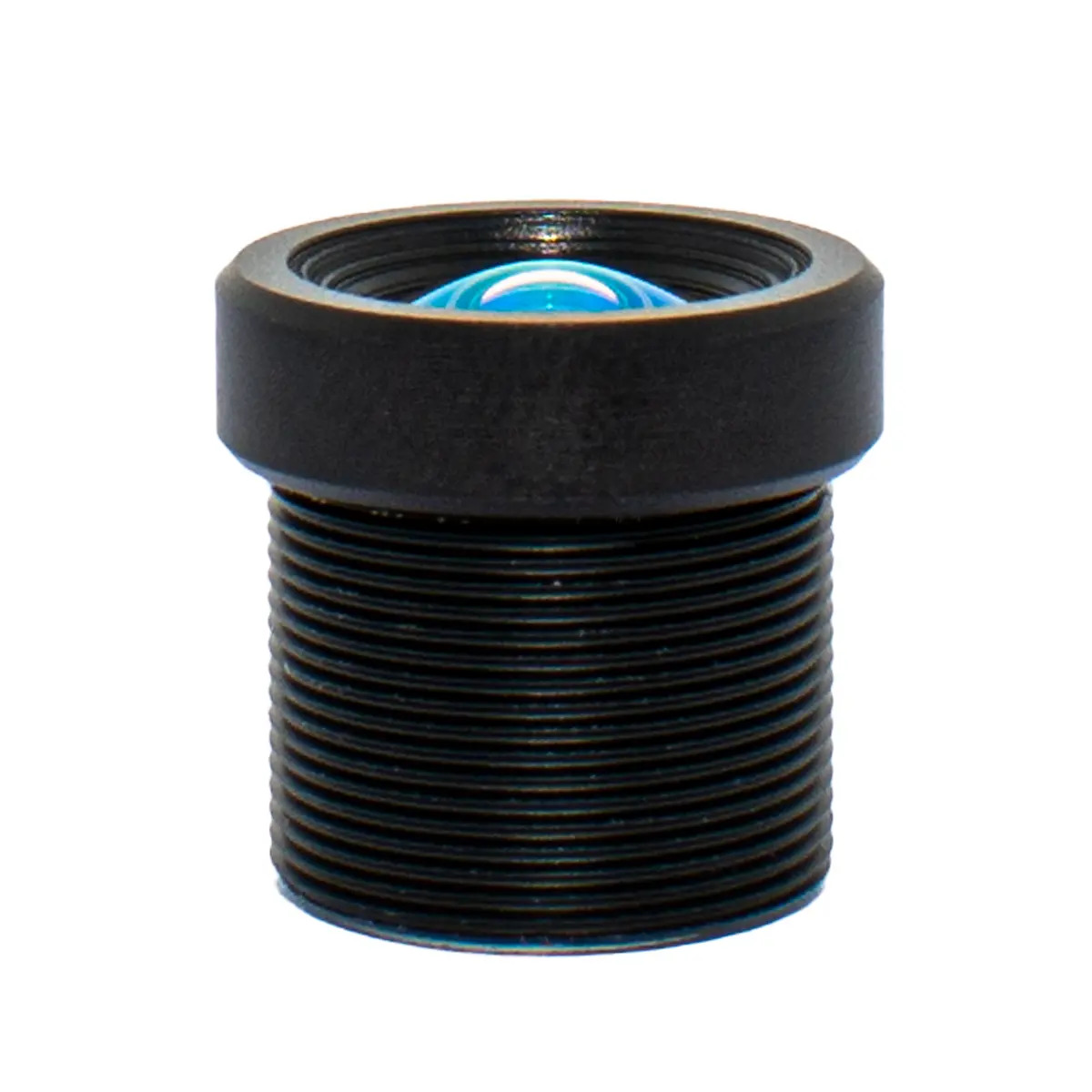

FUZHOU, FUJIAN, CHINA, August 13, 2026 /EINPresswire.com/ — Implementing reliable facial recognition and artificial intelligence capabilities requires more than advanced algorithms; it begins with stable, accurate depth information captured at the optical level. As engineering teams integrate spatial data for smart homes, automotive sensing, and advanced security surveillance, the requirement for matching the optics to the specific time-of-flight (ToF) sensor architecture becomes paramount. A High Quality ToF Lens Solution is essentially an optical configuration designed precisely around the ToF sensor, balancing focal length, aperture, horizontal field of view (HFOV), and bandpass wavelength filtering against demanding environmental conditions.
Fuzhou ChuangAn Optics Co., Ltd. (CHANCCTV) addresses this critical requirement with a comprehensive ToF lens portfolio. Covering 1/2-inch and 1/3-inch sensor formats, compact M12 mounts, various focal lengths, and 940 nm bandpass options, these lenses have been successfully applied in applications requiring precise 3D spatial awareness, including depth measurement, skeleton recognition, motion capture, and automotive sensing. Because the true value of a ToF lens in any project must be validated through sensor integration, rigorous calibration, and sample testing, CHANCCTV provides detailed model-level specifications, rich application insights, and responsive customization support. This structured approach connects product specifications and application data with sample verification, allowing procurement and engineering teams to translate their system requirements into verifiable optical parameters.
ToF Lens Suitability Starts with Depth-Sensing Optics
The foundation of any successful depth-sensing system in facial recognition and AI projects relies on highly controlled optical parameters. A reliable ToF lens development process is anchored in providing the exact specifications necessary for product teams to build robust depth systems, covering critical variables such as sensor format compatibility, focal length, maximum aperture, field of view, bandpass wavelength transmission, and thermal stability across the operating temperature range.
The current CHANCCTV product lineup includes versatile options optimized for 1/2-inch and 1/3-inch sensors, supporting high-resolution sensing of up to 5 MP. With focal lengths ranging from 1.62 mm to 7.76 mm and HFOV options spanning from approximately 48° to 109°, these M12 ToF Lens Solution configurations offer the extreme flexibility needed for various working distances. These optical parameters directly dictate the field of view and the light-gathering capability of the depth camera. However, while high-performance optics are critical for establishing the initial signal quality, the final depth accuracy and recognition results remain a product of the interplay between the ToF lens, the sensor, the active illuminator, system calibration, and the processing algorithms. By establishing a reliable optical baseline, developers can focus their engineering efforts on refining the broader system architecture.
Model-Level Parameters For 940 nm Systems
A ToF lens must precisely match the system’s illumination wavelength and sensor architecture to function effectively. The integration of a specific bandpass filter, combined with the correct aperture and field of view, significantly impacts the strength of the received signal and the system’s ability to suppress ambient daylight interference. For applications requiring near-infrared illumination, 940 nm systems are a standard choice to minimize interference from visible light and ensure optical reliability.
The CH3731C serves as a concrete, model-level example of this optical alignment, providing a specific evaluation starting point for 940 nm ToF systems. This particular model features a 1/3-inch format compatibility, a 3.3 mm focal length, an ultra-fast F1.1 aperture designed to maximize the capture of returning infrared photons, and a wide 74.5° HFOV. Crucially, it incorporates a tightly controlled BP940 nm filter and utilizes a standard M12 mount, providing a compact footprint with a rated operating temperature range of -20°C to 85°C to endure harsh environments. While these model-level parameters deliver a strong foundation for hardware evaluation, project engineers must still determine the effective working range, absolute depth accuracy, modulation frequency compatibility, and eye-safety standards through full module-level testing and system integration.
Facial Monitoring, Gesture, And AI Application Context
Time-of-flight depth sensing enables a wide array of advanced capabilities that transcend basic 2D imaging. These applications include high-resolution depth mapping, close-obstacle detection for robotics, in-cabin facial, head, and blink monitoring for driver alertness, gesture control interfaces, pedestrian behavior analysis, and comprehensive sensor fusion. In the specific context of a facial recognition project, accurate depth information enhances spatial structural input, effectively preventing spoofing and significantly improving identification reliability under dynamic conditions.
However, the overall stability of the recognition process is governed jointly by the subject’s distance, ambient lighting variations, potential occlusions, algorithm robustness, and calibration quality. Fuzhou ChuangAn Optics Co., Ltd. draws on application experience that spans Iris Recognition, Smart Homes, VR/AR, Automotive ADAS, and general CCTV and surveillance operations. By providing proven optical solutions across these demanding domains, the company offers an adjacent application context for AI vision projects. This ensures that developers can reference proven optical configurations used in demanding scenarios when designing new intelligent systems that require uncompromising depth reliability.
Development Experience And Product Readiness
Product readiness in the optical sector is proven through completed optical designs, successful mass production scaling, and documented application environments. CHANCCTV has an extensive track record of designing and manufacturing multiple ToF lens models, explicitly supporting development directions that include depth measurement, skeleton recognition, motion capture, and autonomous driving applications. Buyers require assurance that the components they source have already survived the rigors of industrial deployment.
Since its establishment in 2010, CHANCCTV has maintained a dedicated, long-term focus on the research and development, production, sales, and service of optical products. This long-standing industry presence has fostered vital technical adjacencies between their ToF lens portfolio and other specialized product lines, such as iris recognition optics, automotive lenses, and smart-home vision systems. Furthermore, the company maintains strict quality management protocols throughout the manufacturing process, ensuring consistent performance from prototype to mass volume. Rather than substituting concrete engineering inputs with vague claims of being AI-ready, the manufacturer confirms product readiness through the availability of selectable models, accessible test samples, detailed datasheets, and transparent system test performance indicators that engineers can audit.
Custom Inquiry and AI Integration Checklist
Moving efficiently from an initial concept to a validated prototype requires clear communication of technical requirements and a streamlined procurement process. When submitting a request for quotation (RFQ) for a ToF lens, procurement teams and engineers should provide a comprehensive integration checklist to prevent costly iterations. This necessary input includes the specific sensor model, active area dimensions, intended illumination wavelength, working range, target FOV, required aperture, mount type, operating temperature parameters, expected depth accuracy, calibration method, and estimated production quantity.
To support rapid prototyping and AI integration schedules, Fuzhou ChuangAn Optics Co., Ltd. accommodates highly flexible procurement policies, including the acceptance of a one-piece sample and no MOQ requirements for standard components. With stock samples typically available for dispatch in approximately 3 days and a firm commitment to a 24-hour inquiry response time, development teams can quickly verify optical compatibility in their labs before committing to extensive module and algorithm calibration. The quality of a ToF lens solution should always be judged on verifiable model specifications, sample image capture, physical depth testing, and environmental validation.
Conclusion
Selecting the right optics for advanced spatial sensing requires partnering with a supplier capable of bridging the gap between theoretical specifications and physical validation. With optical product development experience dating back to 2010, Fuzhou ChuangAn Optics Co., Ltd. offers a comprehensive procurement and engineering foundation. From an extensive portfolio of ToF lenses and detailed application data to flexible sample policies and dedicated custom engineering support, the company enables B2B buyers to move efficiently from initial specification screening to rigorous sample verification.
Driven by the fundamental commitment to develop sharper lenses, create ideal solutions, and provide customized services to realize innovation, the manufacturer stands ready to support complex machine vision and artificial intelligence requirements. To explore specific product configurations, request a physical sample, or discuss custom optical engineering tailored to your next project, visit the official website at https://www.opticslens.com/ and submit your sensor parameters, mount preferences, focal length requirements, working distance, filter needs, environmental constraints, and validation criteria for a professional consultation.
Fuzhou ChuangAn Optics Co., Ltd.
CHANCCTV
email us here
Visit us on social media:
Instagram
Facebook
YouTube
Other
Legal Disclaimer:
EIN Presswire provides this news content “as is” without warranty of any kind. We do not accept any responsibility or liability
for the accuracy, content, images, videos, licenses, completeness, legality, or reliability of the information contained in this
article. If you have any complaints or copyright issues related to this article, kindly contact the author above.

Media gallery