
Australian Maritime Union Leaders Bring AUKUS Security Warning to Washington
Just another WordPress site

Press Release Disclaimer: This is a press release distributed through the XPR Media network. It has not been independently verified by our newsroom.
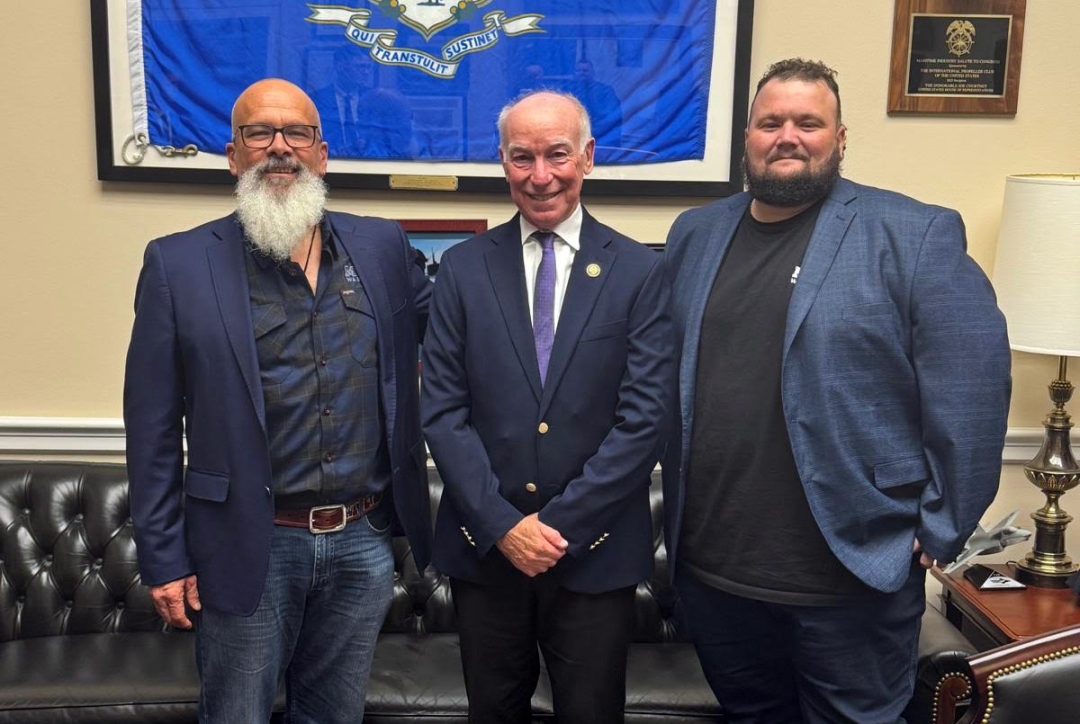

WASHINGTON, D.C. – October 8, 2026 – During the month of September, Maritime Union of Australia WA Branch Secretary Will Tracey and Assistant Secretary Kyle McGinn completed a multi-city tour of the United States and Canada to brief American lawmakers, defense analysts, and maritime workers on what they describe as a direct and avoidable threat to the AUKUS submarine program and WA freight supply chain.
At issue is the Western Australian government’s Westport project, which would move the state’s container terminal from Fremantle south to Kwinana in Cockburn Sound and rebuild it as an automated port. The new terminal would sit about six kilometers, roughly four miles, across the water from HMAS Stirling, the base where United States Virginia-class submarines will rotate under AUKUS. Full background is on the campaign’s threat assessment page.
The Ask
Union leaders are asking Congress to authorize a risk assessment evaluating the security risk to AUKUS from the West Australian government’s planned automated port. The assessment should identify the potential dangers of having a commercial container port developed within four miles of critical international military assets, including allied bases hosting United States nuclear submarines.
“American submarines and American crews are going to be operating out of Cockburn Sound,” Tracey said. “The question Congress should be asking is why a risk assessment has not been completed to identify the dangers of putting one of the largest automated container ports in the southern hemisphere directly across the water from their assets. We think a risk assessment is vital to the future of this program.”
“Dragging all of Western Australian freight access into a single port would cause unprecedented overlap between military and economic assets for Western Australia, states McGinn, when asked how the port will impact both international and domestic shipping, military fleets, and allied relationships.
Third Party Analysis
The campaign’s case rests on third-party analysis rather than union opinion. A 5 August 2025 assessment published by the Institute for Integrated Economic Research Australia, written by Air Vice-Marshal John Blackburn AO RAAF (Retd) and Commodore Vince Di Pietro AM CSC RAN (Retd), sets out three problems with the siting. Cockburn Sound has a single narrow navigable entrance used by submarines and commercial shipping alike. Inside the sound, the shipping channel serving the proposed terminal crosses the route submarines take between HMAS Stirling and their planned maintenance facility at Henderson. And almost none of the commercial traffic is Australian: the country has fifteen Australian-flagged commercial vessels over 2,000 tons, meaning virtually every ship passing the submarine base is foreign-flagged.
The union’s own paper, Westport: A Risk to AUKUS?, appears at Annex A of that assessment and includes satellite imagery of commercial vessels already working within two kilometers of HMAS Stirling.
Specialist defense press reported the siting problem in August 2025. Robbin Laird covered it for Defense.info on August 12 and for Second Line of Defense on August 13.
The Westport Project
Westport became Western Australian state policy before AUKUS was announced in September 2021, and the site has not changed since. The project reached its business case in late 2024 with the terminal still planned for Kwinana. The Western Australian Premier has publicly dismissed the concerns raised about the relocation. No risk analysis of the relocation conducted in light of AUKUS has been published.
Union Leaders Travel Across North America
The Union’s itinerary included Baltimore, Washington, D.C., San Francisco, Tacoma, Seattle, and Vancouver before leaders returned to Australia. Alongside meetings in Washington, they met with maritime labor organizations on both the U.S. and Canadian west coasts, including leaders of the ILWU, ILWU Canada, and the ILA, who also face port security and automation concerns across their waterfront.
“This isn’t about whether you support AUKUS or not,” McGinn says. “It’s about whether or not the billions of dollars being spent are put at risk or threatened by a port that cannot be undone.
Once the concrete is poured, the damage is done.”
About The Campaign
Westport Threatens AUKUS is a public information campaign calling for commercial container terminals to be kept clear of the naval base hosting United States nuclear submarines. A clear goal of the campaign is to have a full risk assessment of the interaction between the Westport Project and AUKUS. The Maritime Union of Australia, WA Branch sponsors the campaign.
Contact
Name: Paul Road
Email: media@westportthreatensaukus.org
Media Contact
Company Name: Australian Maritime Union
Contact Person: Paul Road
Email: Send Email
Country: United States
Website: https://westportthreatensaukus.org/
Press Release Distributed by ABNewswire.com
To view the original version on ABNewswire visit: Australian Maritime Union Leaders Bring AUKUS Security Warning to Washington

