Fabrication of Flexible Microsystem for Prospective Photodynamic Therapy Applications
Wireless implantable flexible microsystem developed to improve photodynamic therapy by delivering light directly to

Press Release Disclaimer: This is a press release distributed through the XPR Media network. It has not been independently verified by our newsroom.
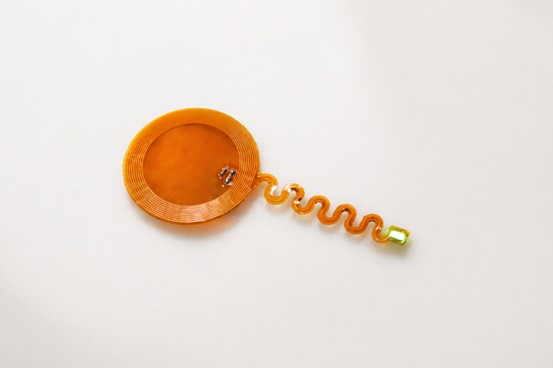

Wireless implantable flexible microsystem developed to improve photodynamic therapy by delivering light directly to internal cancer treatment sites
CHENGDU, CHINA, August 13, 2026 /EINPresswire.com/ — This research explores a new wireless implantable device designed to improve photodynamic therapy (PDT) for cancer treatment, particularly bladder cancer. By delivering light directly inside the body without wires, the system helps overcome the challenge of limited light penetration in traditional PDT. The study shows that the device can successfully generate the key molecules needed to destroy cancer cells, offering a promising step toward more precise, less invasive treatments in the future.
Cancer treatment efficiency depends upon how effectively the treatment can reach and target the cancer itself. One promising approach is photodynamic therapy (PDT), which uses a light-sensitive drug that can destroy cancer cells when it is activated by a specific wavelength of light. PDT is particularly attractive because it can target cancer cells more precisely, helping to reduce damage to the surrounding healthy tissue. Despite these advantages, PDT has an important limitation. Light cannot easily travel deep into the body, which makes it difficult to treat cancers that are located beneath the surface. This is especially challenging for internal cancers, such as bladder cancer, where reaching the treatment area effectively is critical. This research was driven by the need to overcome this limitation and make PDT more effective for these types of cancers.
To do this, the researchers developed a small, implantable device that can deliver light directly inside the body. Instead of relying on external light sources, the device is powered wirelessly, in a similar way to how modern devices can be charged without cables. The device contains tiny light-emitting components that generate the light needed to activate the therapy exactly where it is required. Because it is wirelessly powered, it can operate without physical connections, making it more practical and less invasive. The system was tested in a controlled laboratory setup designed to mimic human tissue, and the results showed that it could deliver enough energy to successfully activate the treatment process. In addition to demonstrating its functionality, the researchers showed that the device is robust and can be manufactured using scalable methods, which is important for future medical use. Overall, this work represents an important step forward in improving PDT. By combining wireless power technology with miniaturized light delivery, it opens up new possibilities for treating hard-to-reach cancers in a more precise, effective, and less invasive way.
This paper was made available online on May 14, 2026 and was published in Volume 9 Issue 7 of the journal Opto-Electronic Advances.
This research looks at a new way to improve how cancer treatments are delivered, especially using photodynamic therapy (PDT). PDT works by using light to activate a special drug that can destroy cancer cells. One of the key advances in this work is the development of a small device that can be placed inside the body and powered wirelessly. This means light can be delivered directly to the area that needs treatment, without relying on external wires or repeated invasive procedures. This approach is particularly useful for cancers like bladder cancer, where targeted and minimally invasive treatments can make a big difference. It could also be adapted for other conditions that need precise, localized treatment, such as certain gastrointestinal or skin diseases. The potential impact of this technology is significant. By delivering treatment more precisely, it could reduce damage to healthy tissue, lower side effects, and help patients recover more quickly.
It also supports the move toward more personalized medicine, where treatments are better tailored to each individual. In the long run, devices like this could reduce the need for hospital visits and complex procedures, helping to lower healthcare costs and improve quality of life. The next step is to test the system in more realistic biological settings to make sure it is safe, reliable, and effective. This includes further studies before moving toward clinical use. Researchers will also continue improving the design, making it more efficient and fully compatible with the human body. Adding sensors to monitor treatment in real time could make it even more effective. Overall, this work is a step toward smarter medical technologies that can both deliver and monitor treatment. In the future, innovations like this could lead to more precise, less invasive therapies and better outcomes for patients.
Dr Rolan Mansour’s research integrates engineering and healthcare to develop innovative biomedical technologies. The group designs implantable and wearable devices, wireless power systems, and smart sensing platforms to improve disease diagnosis and treatment, including cancer. Combining expertise in electronics, materials science, and device engineering, they create compact, biocompatible solutions. Working closely with clinicians and industry partners, the team translates research into practical healthcare technologies that enable more precise, minimally invasive, and personalized patient care.
Reference
Title of original paper: A flexible wireless system for prospective photodynamic therapy applications
Journal: Opto-Electronic Advances
DOI: http://dx.doi.org/10.29026/oea.2026.250275
Funding information
This work is supported by Engineering and Physical Sciences Research Council (EPSRC) via the PATIENT project (EP/X017516/1).
Siyi Ma
Institute of Optics and Electronics, Chinese Academy of Scie
+86 19136186296
oej_publishing@ioe.ac.cn
Legal Disclaimer:
EIN Presswire provides this news content “as is” without warranty of any kind. We do not accept any responsibility or liability
for the accuracy, content, images, videos, licenses, completeness, legality, or reliability of the information contained in this
article. If you have any complaints or copyright issues related to this article, kindly contact the author above.

Media gallery