How Will Starlink Impact Wireless and Broadband Industry, asks Industry Analyst Jeff Kagan
How SpaceX Starlink satellites could reshape wireless and broadband and when Which companies will lead wireless and

Press Release Disclaimer: This is a press release distributed through the XPR Media network. It has not been independently verified by our newsroom.
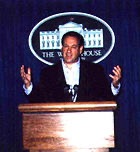

How SpaceX Starlink satellites could reshape wireless and broadband and when
NEW YORK, NY, UNITED STATES, August 7, 2026 /EINPresswire.com/ — Industry Analyst Jeff Kagan says one of the biggest questions facing the communications industry today is whether SpaceX’s Starlink satellite network can become a major competitor to traditional wireless and broadband providers such as AT&T, T-Mobile and Verizon. and how the industry should respond.
“The communications industry is entering another period of transformation,” said Kagan. “The question is whether Starlink can become a disruptive force in wireless and broadband, and what established industry leaders must do to protect and strengthen their positions.”
The wireless industry has evolved dramatically over the past five decades. Beginning with analog mobile phones installed in automobiles during the 1970s, the industry has continually reinvented itself through digital technology, smartphones, mobile data, and high-speed wireless networks. However, growth has become increasingly challenging over the past decade as the marketplace has matured.
Now, industry observers are watching SpaceX closely as Starlink expands beyond satellite broadband. Many believe the company could eventually become a significant force in wireless communications by combining satellite connectivity with advances in AI, broadband, and next-generation networking technologies.
“Executives, investors, employees, competitors, and the media are all asking the same question,” Kagan said. “What comes next, and what will the communications industry look like over the next several years?”
Unlike previous technology transitions, where every major wireless carrier followed the same technological roadmap, Starlink introduces an entirely different network architecture built around low-Earth orbit satellites. That creates both opportunities and challenges.
“Satellite technology brings unique advantages, particularly in underserved and remote areas,” Kagan explained. “At the same time, it also has limitations. Connectivity can be affected indoors, under heavy tree cover, or inside large buildings. Those challenges must continue to improve before satellite can replace traditional terrestrial wireless networks in every situation.”
Today, the U.S. wireless market is led by three nationwide network operators: AT&T Mobility, T-Mobile, and Verizon Wireless. Numerous mobile virtual network operators (MVNOs), including Xfinity Mobile, Spectrum Mobile, Optimum Mobile, Cox Mobile, Consumer Cellular, Cricket Wireless, PureTalk, and others, resell service using those national networks.
Meanwhile, Starlink has already established itself as a broadband competitor by delivering Internet service through its satellite constellation. The company currently competes with cable and telephone broadband providers while continuing to expand its capabilities.
Kagan believes the next phase could involve strategic partnerships between satellite and terrestrial wireless providers.
“It is entirely possible that Starlink could partner with one or more wireless carriers to complement traditional cellular coverage,” Kagan said. “That could help address coverage gaps while giving wireless providers access to satellite connectivity. There are many possible scenarios, and the industry is watching carefully.”
While some initially feared Starlink would rapidly disrupt the communications marketplace, Kagan believes the competitive landscape will likely evolve over several years rather than overnight.
“Every technology has strengths and weaknesses,” he said. “Traditional wireless networks continue to improve, while satellite technology continues to mature. We should expect intense competition as both technologies evolve.”
Kagan compares today’s environment to the earlier convergence of wireless, telephone, and cable television, when previously separate industries began competing directly with one another.
“There will be winners and losers as this market develops,” Kagan concluded. “Some companies will adapt quickly, while others may struggle. The ultimate outcome remains uncertain, but one thing is clear: competition across wireless, broadband, and satellite communications will continue to intensify.”
Further discussion with industry leaders and Jeff Kagan can be acheived by reaching out by email.
About Jeff Kagan
Jeff Kagan is an Industry Analyst, Strategic Advisor, Tech Influencer (TechFluencer), and Columnist covering the companies and technologies transforming business and society, including artificial intelligence, wireless communications, telecommunications, broadband, pay TV, IoT, and related technology sectors.
Kagan advises CEOs, boards of directors, investors, and senior leadership teams on navigating technology disruption and the rapidly evolving AI era. He has written thousands of industry columns and articles translating complex technology trends into practical business insights.
AT&T Executive Vice President of Public Relations (retired) Dick Martin highlighted Kagan’s industry influence in his book Tough Calls: AT&T and the Hard Lessons Learned from the Telecom Wars, writing, “Jeff Kagan has been described as the most widely quoted analyst in the telecommunications industry.”
Companies interested in speaking with Jeff Kagan are invited to contact him directly.
Media: This commentary may be used in coverage of this story.
Contact:
Jeff Kagan
Email: jeff@jeffkagan.com
Website: www.jeffkagan.com
LinkedIn: https://www.linkedin.com/in/jeff-kagan/
X: https://x.com/jeffkagan/
# # #
Jeff Kagan
Industry Analyst, Advisor, Columnist and Tech Influencer
email us here
Visit us on social media:
LinkedIn
X
Legal Disclaimer:
EIN Presswire provides this news content “as is” without warranty of any kind. We do not accept any responsibility or liability
for the accuracy, content, images, videos, licenses, completeness, legality, or reliability of the information contained in this
article. If you have any complaints or copyright issues related to this article, kindly contact the author above.

Media gallery